Friday, November 21, 2014

Aida and the Audition

For our next and (I believe) final project, we are each doing an audition piece. This can be a song, a monologue, or a choreographed dance. Although most of us are doing a song from a musical, there is somebody doing a monologue and another doing a dance. This gives us an opportunity to showcase our strengths, because we have a wide range of choices.
I need to work on my vocal range and also my pitch. If I’m in the right mood, and feel the right way, I can have a wide range, able to sing soprano to tenor if needed. But there are often, especially more recently, times where my voice isn’t at its strongest. This is probably due to stress, lack of my lessons, and also breathing issues. Since I haven’t been to a lesson in a few months, I have stopped really working on my voice. In CATS, we don’t warm up with air exercises and using the diaphragm like I once did, and I have a harder time using my chest voice over my head or throat voice. (When I can use my chest voice, I can sing a lot better than when I’m not). I also need to work on pitch. I know that I have a tendency to sink below the pitch, usually a little flat. I am working on singing clearer and higher to avoid that happening.
My strengths lie in the alto range. When it comes to singing lower notes, I am stronger and can therefore demonstrate that strength. As an actress, I have to tell the story with my movements, and tell the audience a story with my movement and words.
I would like to do a song from Aida. The music for Aida was written by Elton John, so there is rock influence along with musical theater. I think this can show a director that I have a versatile voice, because I can sing rock, blues, jazz, and songs from musicals. This will also give me a chance to show the power in my voice - the stage presence it provides. However, since this is not a classic musical song, I will not be able to demonstrate a gentler tone of my voice - this song would not work if I was trying out for Annie. This also can show the weakness of my flexible range because it can go very high, and also quite low.
The music from Aida is a challenge. It requires extreme presence, feeling, and motivation, things I may need to work on. Nonetheless, as stated before, it will allow me to show a powerful voice and my lower range as well as some high ones.
I will need to pull of my audition piece as close to flawlessly as possible. The rock notes need to be strong, and the calmer parts still filled with emotion. I will need to leave everything i have out on the stage, to show that this is something I am dedicated to - This is to demonstrate my talents, and work on my weaknesses.

Sunday, November 16, 2014

The Life Of Galileo: An Actress’s Take

       “Galileo, the Bible killer!”... or at least according to the citizens of Rome and the Roman Catholic Church in the play Galileo. The Cheshire Academy Varsity Players presented the show Galileo on November 13th, 14th, and 15th. It was in interesting story with many complicated aspects and characters, which may have been difficult for a high school audience to comprehend. The play was written by Bertolt Brecht, a man who believed in the truth. I, as an actress in the play, consider Brecht brilliant. All he wanted to do was create a better world by pointing out the flaws in our own. Unfortunately, I also feel like that wasn’t a message seen by the entire cast, and therefore not convincingly displayed to the audience - I think they could have been just confused. Overall, I really liked our acting skills and the ability to react as each individual character, but we could have worked on the delivery of our message - do not let yourself be oppressed.

         Galileo by Bertolt Brecht is about the fight between a scientist Galileo Galeili and The Roman Catholic Church. The story of Galileo is often romanticized in modern literature. "The great man who invented the telescope against the evil church"... but is that the whole story? the answer, friends, is no. You learn in the beginning that Galileo was not the inventor of the telescope. He actually stole the idea (with the knowledge that he was doing this) from and inventor in Holland, and learns about it from his student, Ludovico. The play demonstrates the truth about Galileo. He was not the man everybody thinks he was. His priorities were with his research, yes but they were more so with his own health. Food, drink, and self preservation were things he valued over his own daughter - Virginia. Virginia was a sweet girl. She believed in God and that her father could to no harm. However, throughout the play, this develops. She begins to see him for who he was - a vain man. Alas, she is too late anyways. By the end of the play, Galileo has contributed to science. But he died alone, in the church. Eventually, so does Virginia. Nobody knows what becomes of Ludovico after he left Virginia, but we know that all of Galileo's friends have abandoned science. The story works out for nobody.

         Each induvidual actor was amazing. Although we were speaking fast, and many lines could not be understood, we explained the story through expressions and reactions, and the audience could understand what was going on without catching every word.

         Since I was an actress in the play, I have more criticism than I do praise - I know this play well, and could see what was done wrong. However, the main error we had was not something I recognized until it was over...

         I have always been big on meanings. The songs I listen to have meaning, the things I do are trying to better the world... not always successful but I'm working on it. Mr. Aronson tried to explain "Epic Acting" to us. I got it, but not completely. The second night, he explained to us how we should talk to the audience - how most of us may be talking to another character, but in reality we are talking to the audience. That got me thinking about how none of my lines were really like that, and then about Virginia... who was she? I realized, after the last show, that she was the audience, in a sense. She was oblivious to everything - she walked in with the mindset of the romanticized story of Galileo the audience had. He was her hero - until scene 13. When she overheard her conversation with Andrea and she finally saw him for what he was, but too late to really do anything about it. This is what Brecht wanted the audience to do, only he wanted them to fix things before it was too late, before they experience the same thing as Virginia.

         I wish we had all caught onto the real meaning of Brecht before the end of the show, but for a highschool cast consisting of new actors we did very, very well. I'm excited for the musical and to do more shows like this in the future, for the older plays are new to me.


Sunday, November 9, 2014

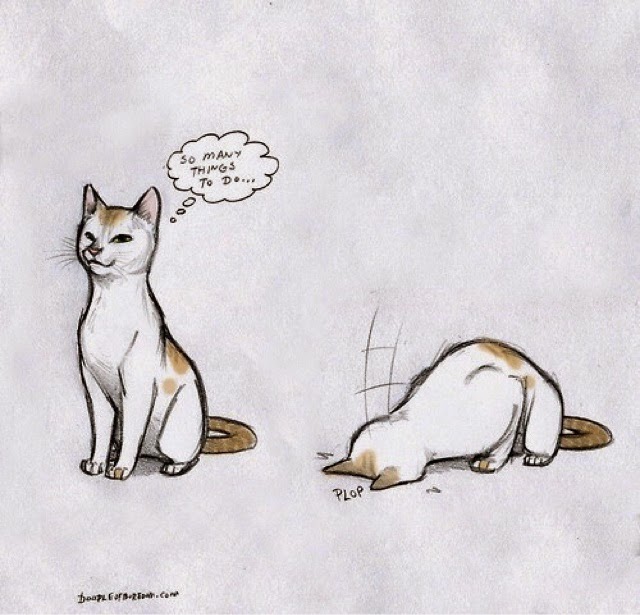
So many places to be and things to do...

          Our scene work is going well, for the moment. We've all learned a lot about body language, motion, and got deeper insights on who we are as actors. I, for one, discovered how hard it is to remain sad in a scene. In order for it to fully work you have to look the part - the whole way through. This means your facial expressions have to be pointed downward. Your eyes have to be sullen, not bright. Everything - from your eyebrows to your mouth has to portray sadness. This is extremely difficult for me to do. I'm only sad when I have a good reason to be sad - I've never had to fake cry or anything, which is why I struggle with Bo and Patti.
          In addition, I learned about how to show the characters backstory and motivation through my acting. Knowing these things made the acting more realistic - I could understand why something was being said and then even further know how to deliver that line. I good example of this is in the Rosa and Maria scene. I play Rosa, a pregnant teenager just telling her friend the news. When Maria finds out, she asks if "Johnny" knows. We determined that Johnny is her boyfriend, the one who got her pregnant. Then I decided that she didn't tell Johnny because she is afraid he will leave her - why would he want to become a father? All of this leads me to deliver my line "no" quickly, as if I'm hiding something (because I am). 
          I also learned the true importance of memorization. I used to never study lines when I was at home. I was often a lead, so all my lines were being repeated over and over again every afternoon at practice, or I had a smaller part where the few lines I had were easy to learn. Sometimes I didn't have any lines at all. This made memorization easy for me. The only thing I had to do was sometimes record them and listen. Now, I don't have drama everyday. The days I do have it, we might not me practicing a scene I'm in - I actually had to study the lines. I learned techniques, I learned how to do it, and even though I still struggle a little, I'm getting better. 
          Luckily, I'm working with friends in my scenes - people I know, people I trust. This has its advantages and disadvantages. A good thing is that I'm not afraid to open up and really act, like I can be in Galileo or anywhere else where I don't know the other actors extremely well. On the other hand, it can be hard to remain focused. You think of something stupid the other person says and next thing you know you're both dying of laughter on the floor. This doesn't help when it's already hard to remain focused on the depressing mood of the scene being performed.
          Another new trick I learned is the importance of using the space. In our scenes, we are the ones who determine where to enter, where to exit, ect... This allows me to figure out the best way to use the space so that I can portray what my character is thinking. I use this in the Rosa and Maria scene as well. When Rosa is trying to decide how to tell Maria she's pregnant, she gets up, and paces around the room a bit, looking away from her friend. This shows nervousness and fear to admit something to somebody she loves. 
          This has been a great learning experience for the whole class. I hope we will continue to do as well as we did today. 
- Sam Weed


Wednesday, October 29, 2014

Pregnant and Depressed

    In our acting class, we have been asked to memorize and perform two scenes, focusing on our motivation and the emotion behind each and every line, along with the characters backstories.

    My first part is a girl by the name of Patti. She's in highschool, probably about 15, and very much an introvert, although she has a good amount of friends at school. However, none of her friends are really close enough so that she can tell them anything, that role had always been taken by Kenny, her older brother. She doesn't see a life without him, and even claims that "He was the only one who ever talked to her." Unfortunatly, a few days before this scene, Kenny is killed in a sitting car by carbon monoxide poisioning. At the time, he was on a date with Mary, the sister of Bo, the boy with Patti in this scene.

    This tragedy leaves Patti devestated. She keeps herself locked in her room, and refuses to eat anything or go to school, even though her mother won't stop nagging her about it. When Bo enters in the beginning, she's mad at him, thinking he's just another ploy by her mother who's trying to get her to eat. Patti doesn't want to look at him, or really even talk. To demonstrate this, I hide my head in my knees and refuse to look up at him. Bo, however, calmly talks her into letting him sit down next to her, and they bond over the definition of carbon monoxide - which, strangely Patti has memorized. She's punishing herself for being alive, for still living even though her brother is dead. To her, Kenny's death can be blamed on her - she didn't roll down the windows, and that damn carbon monoxide managed to cut off the oxygen of her brother and it killed him. As a result, she memorized the definition and she's torturing herself with it, and she turns to Bo for comfort. Alas, all Bo can say is some cliche line about how they are all trying to get through this.

    I also play a highschool girl Rosa. I picture Rosa as a preppy girl, popular, pretty, but nice too. She's dated a few guys, but never too serious about anything, until recently. Her boyfriend Johnny and her have been dating for a while, and felt that it was time to actually have sex. Unfortunately, they weren't careful and she ends up pregnant.

         I chose to portray Rosa as scared, but not willing to show it. In the beginning, she avoids the topic of her health and why she won't try out for cheerleading - proving how she doesn't want to talk about her pregnancy and her future. Further proving this point, she didn't think about how she might have to drop school when she starts to show, she hasn't even told Johnny - which brings us to her fear. Not only does her neglectance to inform the father of her future child show her avoidance of the topic, but also her fears toward to future. She doesn't want to tell him, and I can show that by saying the lines quickly and forcefully, as if I am denying the truth.

         Eventually, Rosa does tell Maria about the kid. This is a slightly difficult part to perform, since I have to show all these emotions at once. She's nervous, scared, depressed, confused, but also relieved. Now, she has somebody to talk to about it. I think her and her mom don't have a great relationship, and the baby isn't going to strengthen that, so she can't talk to her mom. Johnny might just get scared and leave - after all, he can, because he's not carrying the baby himself. He's not the one giving birth. Rosa turns to her best friend, who, of course, accepts her and even offers helps her through it, telling her how she'll bring her notes and such to her when she can't be there. It ends up okay.

         And so will this blog post - which has been really long. See you in... like... a week!

-SW


Friday, October 24, 2014

The Final Silent Movie

Our silent movie, in the end, can be described as... interesting, to say the least. In my personal opinion, we did well. That being said, there are some that beg to differ. Either way, we learned many new things that can relate to other parts of acting. Part of this involved the skill of body language, which is helpful when acting in anything. Although this particular body language was very much over exaggerated, the importance of it is clearly demonstrated. We managed to convey to an audience a plot line without any spoken lines, proving the power of our body language.
Furthermore, our facial and body expressions made the plot quite obvious, for it could be seen in our face. This worked to our advantage, because it made the movie easier to understand. The simple yet descriptive set also "set" the tone - it didn't look 100% real, but not 100% fake either. People could tell we were acting, which is partly the whole point of a silent movie.
In addition, the computer editing really helped. We were able to speed up the end, which made it funnier, and add music for effect. The music we chose was quite generic, but it worked for the specific plot line of our scene, that was not generic at all. We were also able to add "Three hours later" between two parts, helping to  show how time has passed.
I personally found my part to be mediocre. It really could have been better. Watching it over, I realized that many of my actions weren't even in the shot, which sort of defeated the idea of doing anything extra at all. Also, in the scene where I get mad, it almost looks like I'm dancing. My heads nodding and my arms are waving. We didn't have to make that part so sped up, because it just added to the problem.  
I definitely improved my facial expressions. Since I have always had to say lines, not act them it, I never really noticed how much that facial movements can really show emotion. I think this was true for everybody else, as well. When acting with lines you rely on the words and your delivery of them to show emotion, or to stir up a feeling in the audience. However, in a silent movie, we didn't have that advantage.
I had difficulty getting into character for this part, In previous performances, I've had the way the character talks, sarcasm or anything to determine what they were like. Here, I had to not only make it up myself but also guess what she was like. I think in the end it worked out pretty well, but for a while it was difficult to do.
We, as a group, need to work on our focusing skills. We can't do a scene without dying of laughter. While the video may have looked okay, what you don't see is us cracking up in the background because of somebody dancing or falling or something else stupid.
But we ended up okay, and that's all that counts